The day started late at roughly 8 AM and the aim was to reach Ahmedabad after having breakfast. Today’s plan was flexible because the main aim was to catch the train at 06:00 PM and to visit some place only if time was available.
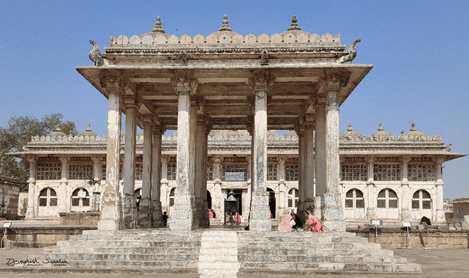
My ride was mainly uneventful and fast so I reached Sarkhej Roza in Ahmedabad roughly at 12 noon which was a prominent centre of Sufi culture built by Sultan Mahmud Shah I. The compound appears to be built in parts surrounded by an artificial lake which was dried up at the time. The site also houses the tomb of Sufi saint Ahmad Khattu “Ganj Baksh”.
The next stop was Sabarmati Ashram where I was supposed to meet an old friend living in Ahmedabad. When I reached the parking of Sabarmati Ashram; she was already waiting there. Now I had company and she had been to the Ashram four times before so I had to make a decision to bore her by browsing through and reading everything or wrap up fast. And, I decided to wrap up in 30 minutes because:
She planned on having lunch and was hungry.
I had read not to bore beautiful ladies else they bite.
It’s Ahmedabad, I have one trip left of Gujarat and can return here anytime.
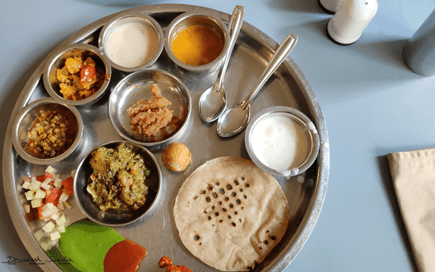
So, she guided me to a normal looking place called “Toran” but the food and hospitality was unforgettable. On top of that I also learnt the outlines of the recipes of Patra, Vasundi and Undhiyu. After overeating we went to the Sabarmati river front and talked for the rest of the available time.
We returned the bike and she drove me to the railway station and I left Gujarat with lots of memories and experiences to cherish.
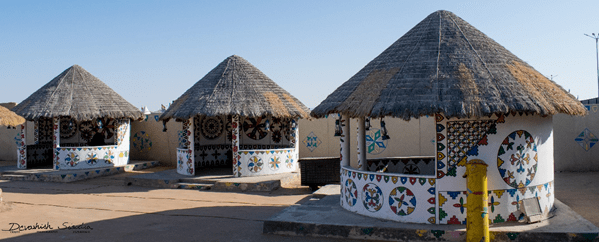
The ride started before the sun woke up as the day was going to be very long. The first stop was Dhordo, the site for Rann Utsav. Dhordo is a small village connected with a small road, full of mud huts intended for tourists at the end of which there is a huge tent city- colorful, informative, comfortable. The compound gives a glimpse of Guajarati culture, a museum explaining Gujarat’s wildlife and geography, ample opportunities to shop and some adventure sports. Also, the tent city is eco-friendly; it provides bicycles and battery-operated vehicles for roaming around.
At the entrance of Tent City Rann UtsavThe tent city is full of masterpieces depicting Gujarati culture
The next thing I noticed was the Afghani names & culture of the local people. The area was largely populated by Afghans who migrated in the 16th to 17th century and were largely employed in the local army. In the 17th century even the generals of army were from Afghanistan.
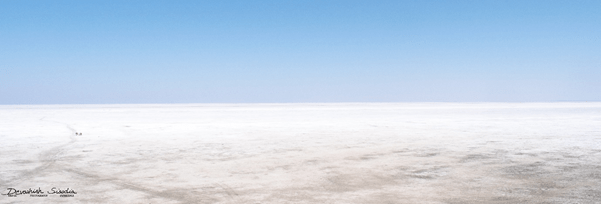
Just 2 kilometers ahead is the famous White Rann of Gujarat but to go there a pass is needed. So, after getting the pass and crossing a checkpoint I reached the view point for White Rann.
The White Rann
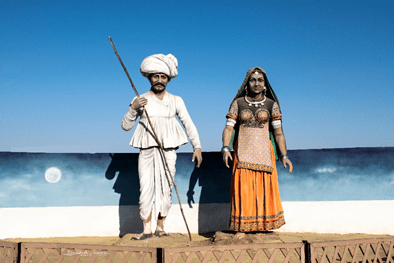
The land is obviously white as far as eyes can see with patches of brown created by tourists, camel owners offering rides, a guy with a traditional setup of village house offering pictures and a huge staircase which gives the entire view with fast blowing salty winds into your face.
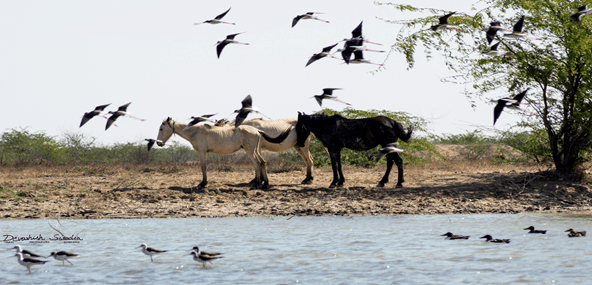
After enjoying the view for an hour, I left and met the army personnel at the check post who had asked me from where I was, what I was doing & to meet him begore leaving. So, we started talking and he mainly wanted career advice for his son. The conversation soon ventured into drug problem among youngsters, hardships of army life, controlling kids etc. and I felt like I have turned into an adult coz I was apparently adult enough to advice on kids matter. After two hours of discussion and lunch I left for Kalo Dungar- The highest and the best point of view in Rann. On the way to Kalo Dungar I saw two Indian wild asses so I stopped but when I reached closer, I realized they were horses of the same color as the Indian Wild Ass. Still, clicked some pictures and rode ahead.
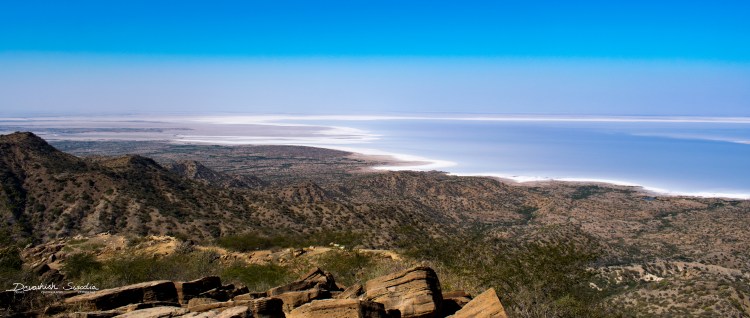
The uphill ride to Kalo Dungar is scenic, containing steep hills and valley with beautifully shaped deciduous trees and some shrubs and view point was storming with hawkers providing traditional dresses on rent for photographs. The view from there was phenomenal, it appears like a lake with its edges perfectly frozen and surrounded by dark brown hills.
After enjoying the view at Kalo Dungar I searched for the shortest route to Ekal and started riding via a shortcut and found that the route being shown by Google was a road for just 25 kilometers, after that a dried-up seasonal riverbed full of sand. Initially I tried to ride though the river but soon realized that the effort was useless as the sand made me drive at walking speed. So, I traced my route back and rejoined the highway which wasted one hour of precious time. Hence, it was too dark when I reached Ekal Mata Mandir, attended the aarti there and found out that Chief minister of Uttar Pradesh Mr Yogi Adityanath had stayed there for some time and his very old photos were hanging there. From there I moved ahead on the mud road to the salt march to find a place to pitch a tent.
The view from Kalo Dungar
The next experience started at new heights, it was a full moon night and I was at the side of salt marsh which was shining due to the moonlight and felt like walking on diamonds. So, it seems salt crystals also diffract light beautifully. But I was disappointed as I was unable to photograph that brilliance under moonlight and was afraid of using flashes as I was not sure if tenting was allowed or not. Also, I had seen lights moving over the water and I assumed them to be BSF patrols. Nevertheless, I pitched the tent and slept.
Roughly around 10 PM I woke up upon hearing a child crying, then some people started talking and then the dogs started barking. So, to assess the situation I walked towards the source of the sound leaving my tent and bike but was pretty afraid that I will not be able to find my tent and bike if I lost visual contact which was moderate due to full moon. But I had to decide if it was safe to stay or not. As usual the adventurous me took charge and the tent’s location was marked using stars; took valuable items like camera, phone and wallet and the knife with me and started walking towards the source of the sounds. After walking for roughly half a kilometer I saw some tents and animals of local nomads/shepherds. Now, I was relieved and as I started walking back, the dogs probably found my scent and started barking. Now, in my mind everyone knew that I was there as the barking continued for long and I could hear the chatting sound increasing. So, I retraced my footsteps following the stars with my heart pounding with the fear of not being able to find the tent and getting stuck. Soon I had that feeling when you had tortured yourself with the idea of being stupid but you prove yourself utterly wrong; I had followed the perfect path to the tent. So, filled with confidence and pride I decided to leave the place and challenge the night.
By 10:40 PM I had packed up and started riding towards Bhuj-Ahmedabad highway. The plan was to find a hotel on the highway or keep riding through the night to reach Ahmedabad. The road at night was captured by wildlife including deer, foxes, wild cats etc. After riding with the wildlife for one and a half hour I reached the highways and by the time I reached it, the time was 12 midnight. Despite being too late I was a little relieved on the highway, so had dinner at a small dhaba as I only had an emergency snack (light weight sugar rich emergency snacks eg Honey & peanut, snickers etc) since lunch. At around 1 AM, I found a hotel near Samakhali and decided to end the long day and rest.
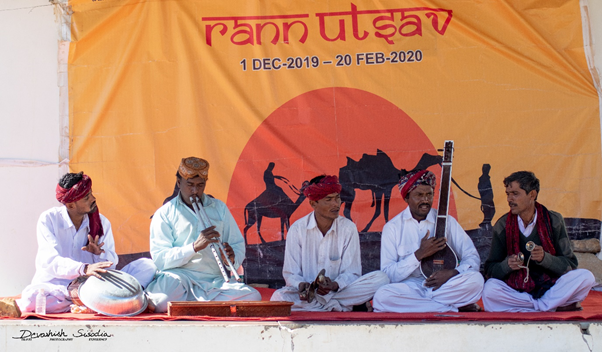
Rann Utsav is a confluence of art, culture, heritage, nature and Adventure Sports
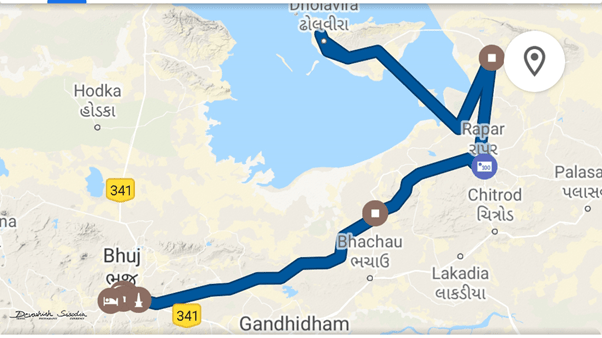
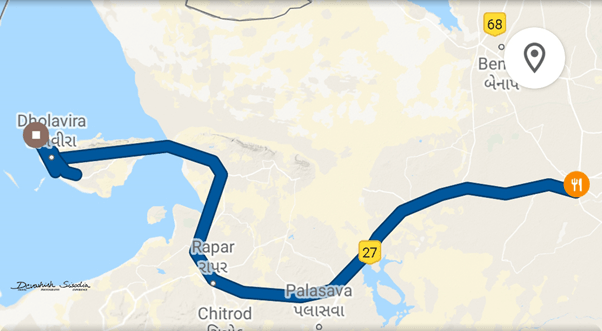
The day’s ride started early even without breakfast or tea & to make the ride from Dholavira to Bhuj a little more interesting, I gave myself two challenges;
To remember the route and not use google maps.
To refill the fuel tank only with Rs. 500 fuel (now I knew the fuel efficiency of the bike and calculated that the fuel available plus Rs. 500 worth of fuel should be enough to reach Bhuj).
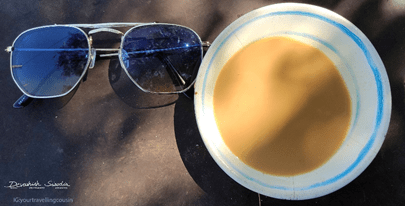
My first stop was at Balasar which is like a small Indian nodal town. There was a stall selling Dabeli (A snack with multiple flavors- sweet, spicy, tangy and salty). It was a tasty treat accompanied with tea served in saucer. I had noticed serving tea in a saucer is common in the area so I inquired about it and got an interesting reply “Rapar people are always in a hurry” which peaked my interest and within a few minutes a question turned into a discussion amongst 7-8 people. And the secret which was revealed out of that was that the area is very dry and most of the people used to rear livestock. So, it was very important to leave home early in the morning to capture the best grazing pastures and this competition had a huge impact on the lifestyle of the locals.
Tea is served in a Saucer around Rapar
From there I continued the journey as per my memory and I was supposed to take a right turn after 50 to 55 kms but when I reached a canal I realized, I had missed the turn I was supposed to take by 5-6 kms as the canal was the route I used the day before and I wasn’t supposed to take that route. Now, I had a to decide to return and find the turn or continue ahead and try to move west towards Bhuj.
So, I continued ahead to Rapar and passed on a road Infront of Jama Mosque Rapar towards Rapar-Kutch Highway via Ratneshwar Temple and I noticed something amazing; Every lady was wearing the same colored, same designed dress; a black and red checked saree or burqha. Unfortunately, I didn’t ask about it and the question kept haunting me for the rest of the journey. Communism or some festival or something I don’t know yet?
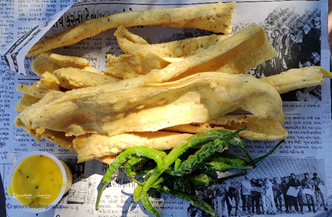
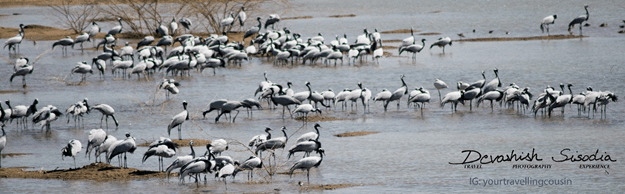
My next stop was Kharoi because I saw a different snack being sold at the roadside stall. It was fafda with a combination of fried chilies and sweet kadhi. The combination was being called Dhakia and to my surprise I liked the sweet kadhi a lot this time and even after this instance which I believe was because there is lot of salt in the area that even the winds taste salty so sweetness in snacks comes as a welcome treat. So, after enjoying the lovely roadside snack and a conversation about life in big cities vs life in villages of Gujarat with the seller, I moved on. Just half a kilometer ahead I saw a large group of demoiselle cranes in a small water body, stopped and captured a few pictures.
DhakiaDemoiselle cranes near Kharoi
A kilometer ahead of that I crossed a canal which had a road running parallel to it I stopped and inquired if the road connected to the Bhuj Highway and the reply was yes but the road is not good. Nevertheless, I decided to take the road less traveled by. Choosing that rural road was a great experience as firstly it was beautiful. Secondly, I met some kids who rode with me from Ner to Deshalpar. One sat on the fuel tank, another on the bag tied behind. We talked about their farming, summers in Gujarat and how naughty the other kid was.
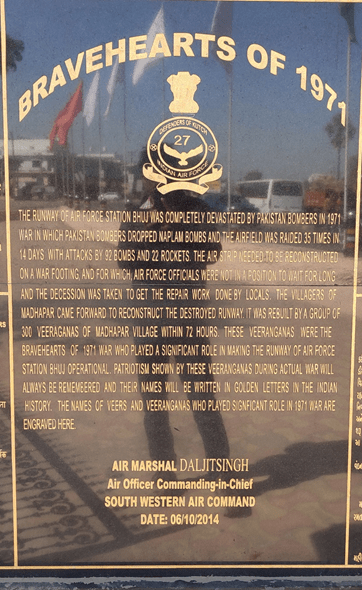
At about 2 PM I reached the outskirts of Bhuj and saw some interesting statues and found out that in the war of 1971 Bhuj Airport was destroyed by Pakistan’s bombing and Indian air force lacked the strength to repair it within a few days. So, the ladies from Madhapur village helped repair it within 72 hours by working day and night. Salute to them!
The monument giving the well deserved respect to the ladies of Madhapur village
From there, my priority was fuel and hotel. So, to save time I looked for hotels nearby and stopped at the first one I found but the experience was very bad so switched back to online booking and rode to the hotel which did cost me 30 minutes of valuable time.
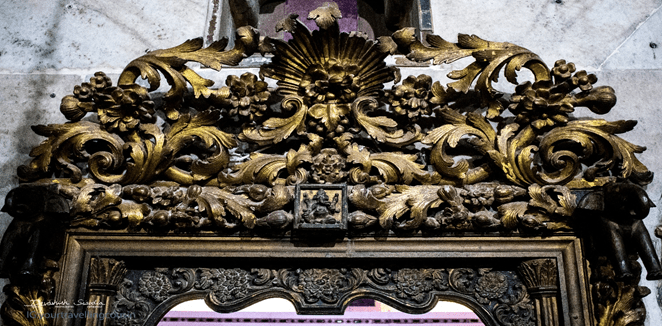
By 3:30 PM I had taken a shower, changed and reached Aaina Mahal which looks ordinary from outside but inside a piece of art. It is a lovely combination of glasswork and woodwork, everything is intricately carved and precisely arranged and there is a stage for musicians which is surrounded by water with fountains, the compound lit by numerous glass chandeliers and the roof is made of carved wood.
One of the many intricately carved Gate panels of Aina Mahal
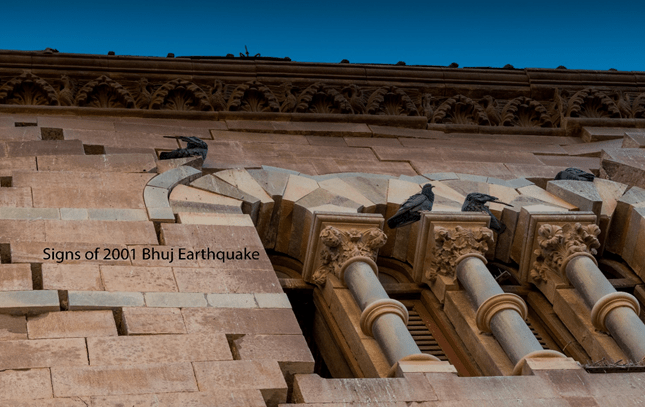
The same compound has Prag Mahal which is built largely as per Roman architecture and has a very good use of white and golden colors with a combination of Roman architectural simplicity and Indian extravaganza. The rest of the compound is badly damaged because of the 2001 Bhuj Earthquake and signs of earthquake can also be seen both in Aaina Mahal and Prag Mahal. The level of destruction which can be seen after so many years gives a glimpse of what Bhuj went through that year.
Many structures in Bhuj barely survived the 2001 earthquake signs of which are still evident
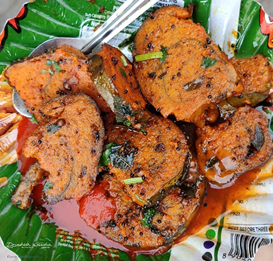
After roaming & shopping in the compound for sometime I had Patra which is made mainly of arbi ke patte (colocassia) and besan (gram flour) similar to patode in bihar and UP but tastes a lot different probably due to the style of cooking and ingredients. I personally liked it so much that I learnt its receipe.
Patra: a snack cooked using arbi ke patte (colocassia) and besan (gram flour)
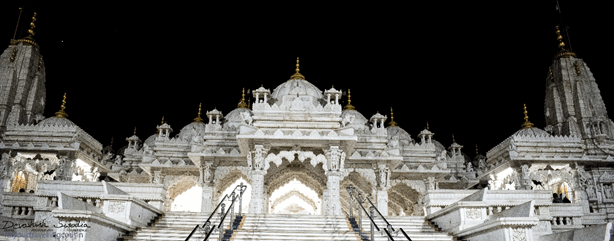
Just half a kilometer away is Swami Narayan Temple which is built completely in white marble and from the first glance I was wondering why isnt this place very famous. Each carving appears precise and there is not even an inch which is not carved. But the place soon lost my interest as there was a rope tied, ahead of which women were not allowed and when the people ensuring the no women allowed rule shouted at a 4-5 year old girl who crossed it behind her father, I felt disgusted and left the place. The visit was a roller coaster ride which started with an awe and ended with repulsion within an hour. Later, the next week I read in a newspaper that the main priest believed that when menstruating women cook for their husband they are reborn as bitches and once the temple trust’s college made girls strip to ensure that the women cooking and entering the dining hall were not menstruating. (Feb 18, 2020 news)
Swami Narayan Temple: Front view
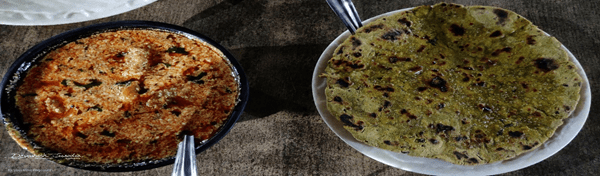
After a bad taste of humanity I went for dinner which was Dahi Dhokali with lahsuniya rotla at Viram Hotel, Bhuj. This Kutchi Dish tasted great, it was quite spicy with a thick gravy in curd and large pieces of gatte (cylindrical baked gram flour) with a combination of lahsuniya rotla which is very thick, made of bajra (pearl millet), lahsun (garlic) and butter accompanied with a traditional glass of chacch(buttermilk).
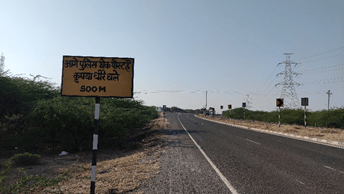
I started riding early towards Rapar & the first interesting thing I noticed was the bluff of Gujarat’s Traffic Police. The roads were very good and the traffic was sparse. So, probably to slow down traffic they have installed sign boards stating Police Check Post ahead but 80% of them were bluffs. Smart!
Road Signs
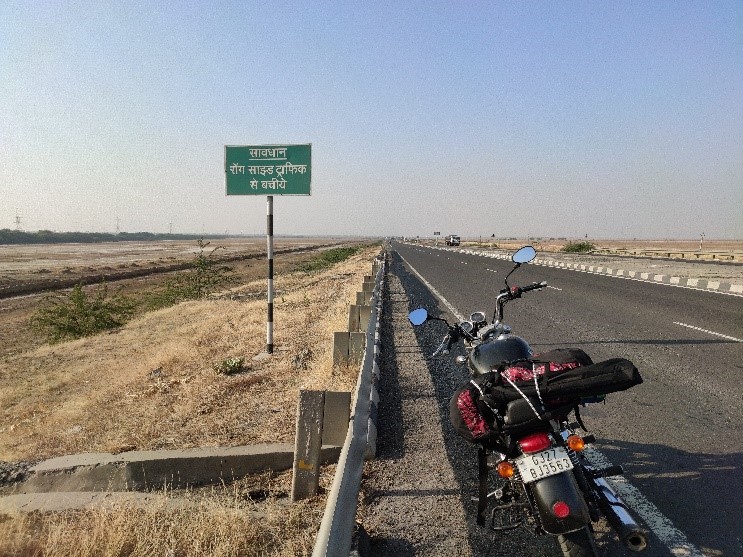
Another thing to notice on the roads were signs warning about wrong side traffic which is very common in the area.
Soon the highway passed through a huge lake with lots of different birds and I got an opportunity to practise photographing birds firstly because I was new to it and secondly, I had to get used to my newly bought 70-300 mm lens. So, after irritating the camera-shy birds for an hour I was back on the road towards Rapar and left the highway at Adesar. From there the route is very peaceful and the cool breeze with the rural scent is very calming. Also, the area is not exactly plain as I was expecting but appears to be a remnant of some ancient hills which made the ride more interesting with the roller coaster effect of riding the bike up and down small mounds.
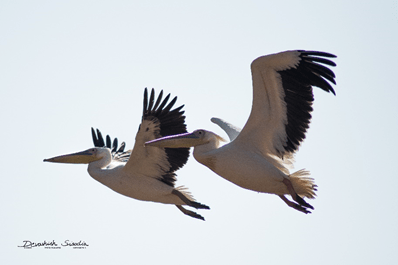
Just before I was about to reach Rapar I got lucky, there was a huge flock of Great White Pelicans resting in a small pond. These birds are really big with unique characteristics like a large yellow beak, flexible neck which allows them to swallow large fish whole and a very large wingspan which allows them to fly long distances. Watching these birds play in the pond is soothing beyond imagination and that’s what I did for an hour.
The Great White Pelicans
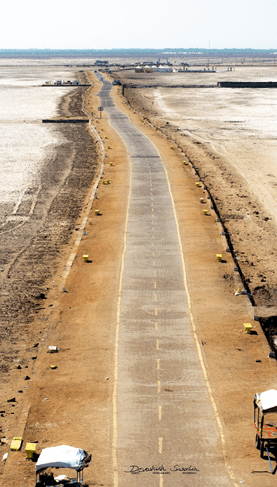
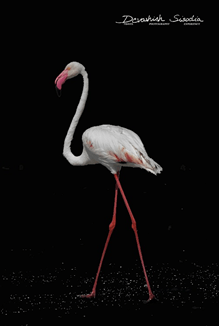
Now, I was a little hungry but decided to eat only after reaching Dholavira. So, I was back on the road and after sometime the island of Dholavira was in my sights connected by a bridge over the salt marsh surrounding Dholavira. The view was majestic; everything was white as far as I could see, no humans, no rushing vehicles; just me, the view and the calmness which was interrupted by a bird- a flamingo just under the bridge. A great white bird with perfectly contrasting red at the back and a uniquely shaped pink beak. Interestingly, Flamingo is the state bird of Gujarat and what better way to symbolise the beauty of Gujarat other than this bird!
Moreover, this particular one was friendly and I could watch it from 10-15 meters away and as I walked closer, I realised the height of the bird was impressive. After spending a lot of time trying to capturing a picture of the bird with its reflection in water (which I couldn’t as the wind was very fast and was continuously created ripples in the water), I realised it was 02:00 PM & it had taken me 8 hours to ride the distance which should have ideally taken only 4 hours despite being greeted by some fantastic roads.
Flamingo- State Bird of Gujarat
Now, I was very hungry & afraid that the museum will be closed by the time I reached. So, I decided not to stop anywhere else and reach there before 03:00 PM and with the help of the properly maintained bike from Riant bikes I reached there at 02:35 PM.
Dholavira- A small village with almost negligible tourists and just two hotels and 2-3 home stays; was very important during the ancient Harappan times. It was a site of Harappan civilisation specialising in bead making, blade making and pottery making industry but I couldn’t totally concentrate on the history because I was very hungry now. So, I enquired from the caretaker If taking pictures was allowed (I planned on reading the details latter) and a place to eat. Interestingly, Mr Meena was from the same place as mine; not only he suggested a good place to eat but also assured me that I could come after eating and he can keep the place open for a little longer if required. Also, I was allowed to take pictures without a flash. Luck was on my side!
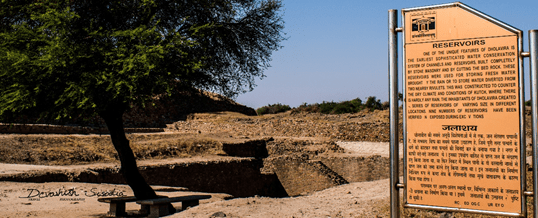
Rain water harvesting system excavated from the ruins of Dholavira
So, I had lunch or whatever the time was for and returned to the museum. Here are the interesting facts I came to know about:
People of Dholavira were good at making blades from stones.
The city was fortified and had natural barriers in the form of two rivers flowing around the city.
The city was well planned with straight roads and an amazing water management system and rain water harvesting system. Something we need to learn from them!
The city had a stadium with seating arrangement for audience.
The fortification of the city was 11 m thick which had signs of repair after an earthquake.
It is the only site with inscription found on the gate (Ten large sized signs in Harappan script which is still uncodified).
Before leaving the place, I bought 5 books from the museum & interestingly it costed only Rs. 105 because archaeological Survey of India sells book very cheap (I also got 40% off).
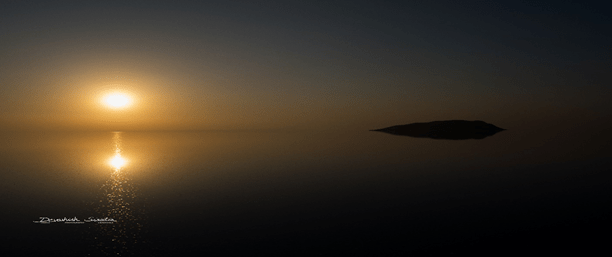
At 06:00 PM I rushed to the salt marshes (Rann) to get some sunset shots and after enjoying the view and sunset till there was light, I went to the BSF post just nearby and asked if pitching a tent was allowed in that area but unfortunately it was not allowed as the border was on the northern side of the salt marsh and night patrols take place to stop intrusion. So, after talking to them for a while I left to hunt for a place to stay and the first one quoted Rs. 6000 for a night on the call (Rann resort Dholavira). So, I decided to ride back 30 kms and pitch a tent but on my way back I stopped at Dholavira Tourism Resort (where I previously had lunch) and I was quoted Rs. 800 for a night. So, after booking a room and taking a shower I went to the dining room and found a group of 60 to 80 kids who were there for an educational tour from Mumbai. And somewhere in my mind I started hating my school for not taking us to such places.
Sunset at Dholavira
While I was waiting for the food, a few of them struck conversation and I noticed a few things like they only conversed in English, they did not know that the white crystals they had walked on during the day was salt and when dinner was served it was futile to make 2 of them understand what sev-tamatar was, as they didn’t know sev or namkeen or besan or gram flour or tamatar (well both of them knew tomato). So, after realising why their school needed to take them to such trips and mine didn’t, I went back to sleep thinking that it’s not Rahul Gandhi’s fault; his school should have taken him to such trips.
The journey through majestic Gujarat started from the Ahmedabad Railway station at 07:00 AM. The station was bustling with activity, cars, autos, bikes buzzing outside the station. So, the first priority was to get the rented bike and leave the city before it becomes jammed with the office rushing madness (Yeah! Today I can call it madness). So, I booked an Ola and reached Riant Bikes in Maninagar to pick up my pre-booked Thunderbird 350. By 8:00 AM I had picked up the bike, filled it to the brim with fuel and rushed to leave the city streets. The route took me through the Sabarmati river front which tempted me to stop as its beautiful; moreover, states have tried river fronts in India but this is the only one which is clean and beautiful. River fronts in India are like the pirated CAM version of Hollywood movies but this one is a lot better – no foul smell and the water is not black. My first stop was on a roadside dhaba outside the city limits of Ahmedabad and coincidentally the first myth was broken ie Khaman and Dhokla are the same things. They look same from a distance but the texture is different Khaman is spongy while Dhokla is Layered. Even the flour is different, traditionally Dhokla is made of rice flour and Khaman is made of gram flour but all these snacks Khaman, Dhokla, Gota etc are served with Kadhi which is a little sweet, spicy and tangy accompanied with fried chillies.
The next stop was Adalaj Stepwell and when I reached there with the help of Google the place didn’t appear to be touristy and even no stepwell could be seen but only a temple and with huge doubt about Google Map’s knowledge I went into the temple worried and then to my relief I saw a board “Donot enter the stepwell from this side” and sighed of relief. The way to the stepwell is from behind the temple.
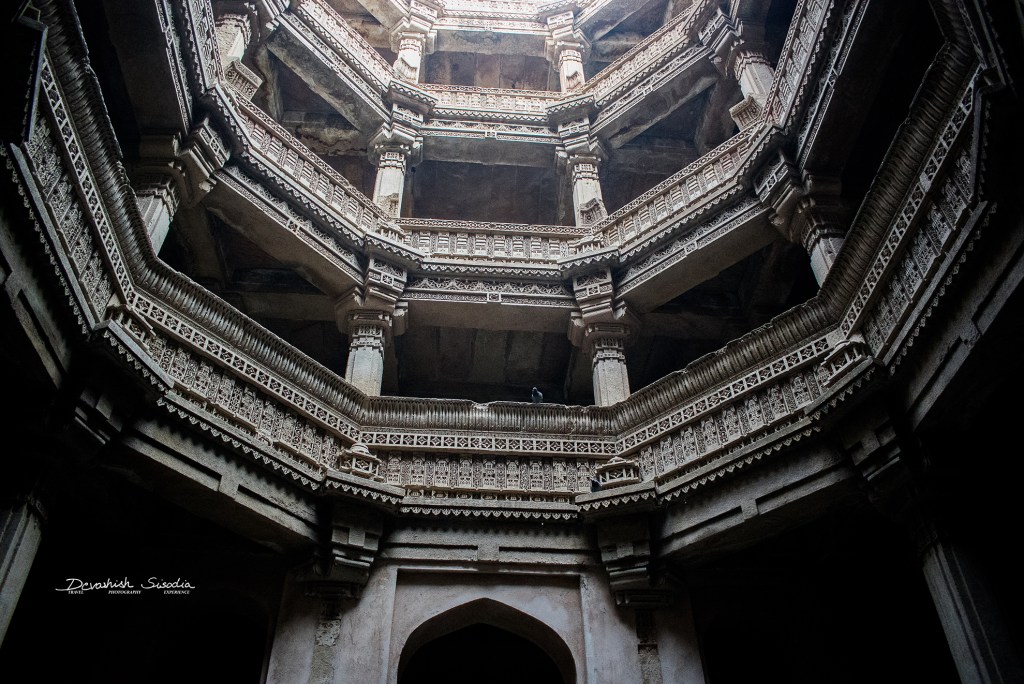
Adalaj Stepwell inside view
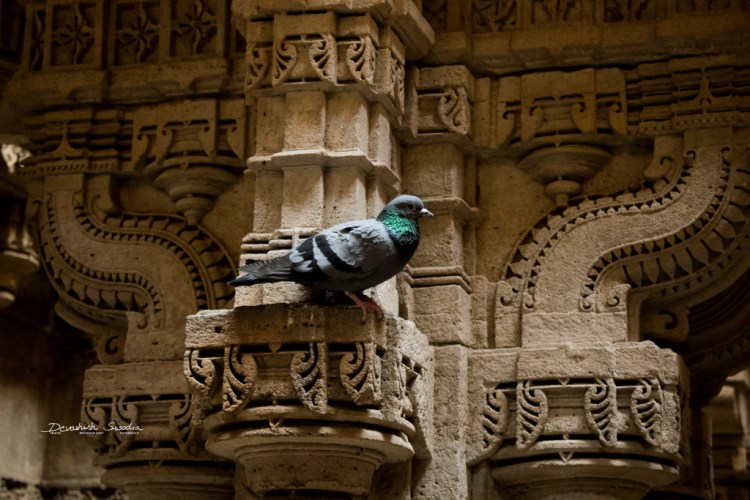
The stepwell is built with intricately carved yellowish sandstone in 15th century. It is built in Solanki style which has features from Indo-Islamic architecture (floral motifs), Jain architecture (Jalis and Jain Statues) and Hindu architecture (pillars and Hindu God’s statues); lots of pigeons inside and calmness. After finishing the tour of the place, I was curious about 2 things:The combination of a temple, Hindu Gods statues and tombs on top of it.
It is built on higher ground then how would the rain water flow into it? So, found a guard and here is an interesting conversation (translated): Me: Who’s Tombs are these? Guard: The artisans who built the tomb. Me: Good, Kings usually don’t honour the artisans who build all these. Guard: No, they were killed by the queen so that they don’t make a new one. Me: The classic end of good artisans. The Queen was mad, If they made a new one it would have benefitted the people. Guard: No (he got defensive like I disrespected his mother). The Hindu king who started making it died in a battle against a nearby Muslim ruler. The Queen (Ruda Devi) who was very beautiful was preparing for sati but the Muslim ruler tried to convince her to marry him. The queen agreed to marry him but on the condition that she will marry him only after the construction of the stepwell is complete. And when the construction was complete she killed herself by jumping into the well and also got the artisans killed because she was afraid that the new ruler will get the well modified as per Islamic architecture. The second doubt remained unanswered.
Pigeons occupy the Pillars of Adalaj Stepwell
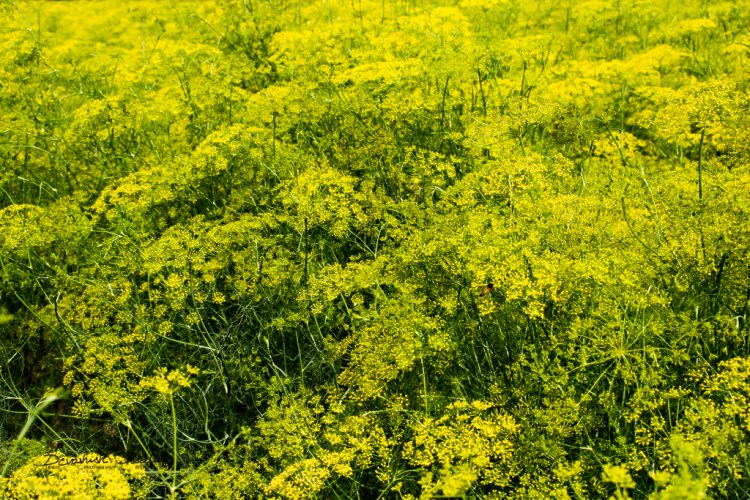
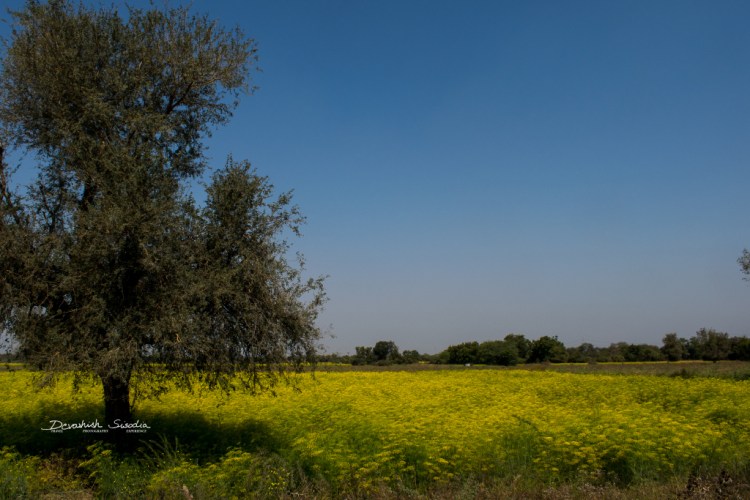
By 10:30, I was on my way to Modhera Sun Temple. The first hour of the ride was pretty boring just a highway and trucks you have to overtake so I decided to take a wrong turn (Well, sometimes the adventurous me gets bored). I left the route chosen by google and started riding in a general North Western direction. Just after a few minutes I noticed that the farms with yellow flowers which I assumed to be mustard was not really musturd. So, stopped and took a few photos; whatsapped them to the expert and came to know that it was fennel (saunf) & India produces more than 50% of world’s fennel and out of that 75% is produced in Gujarat.
Fennel Farming Gujarat
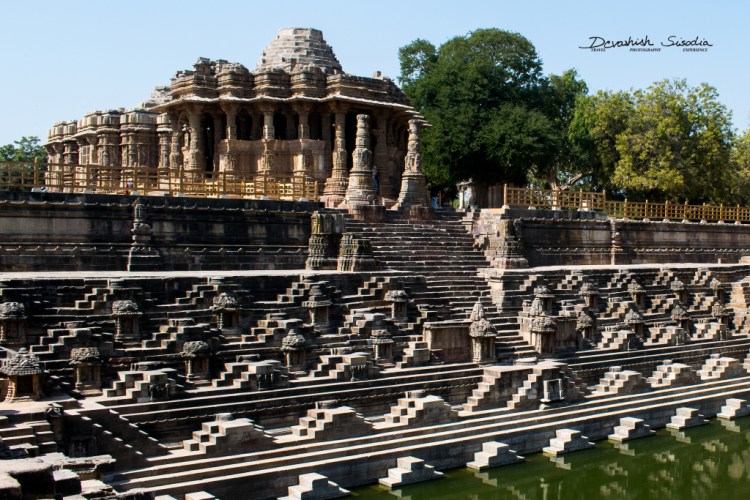
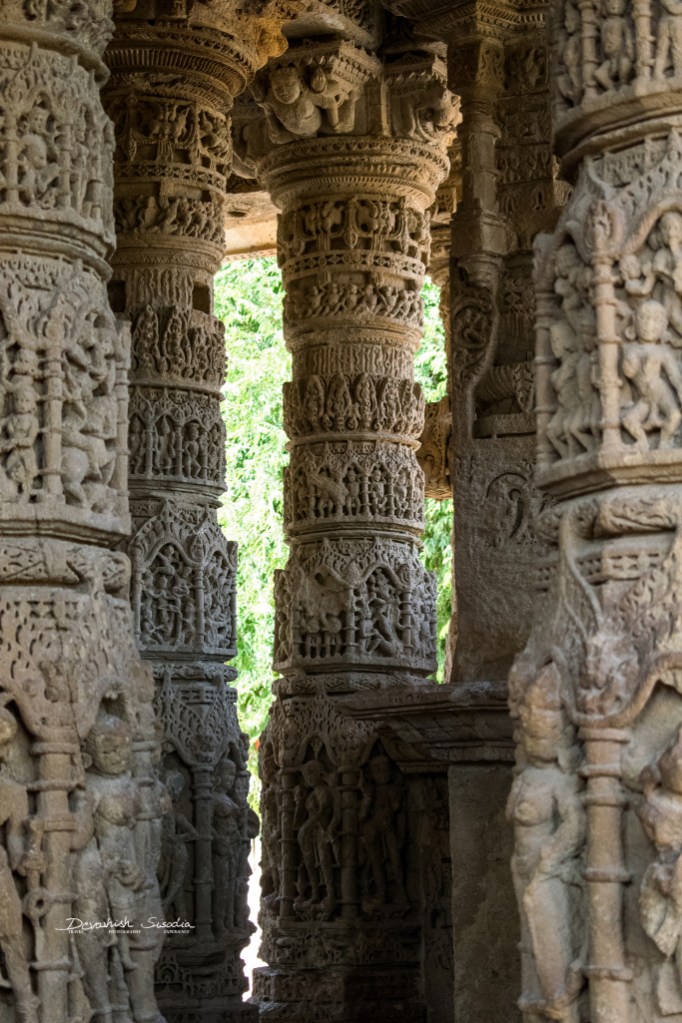
Also noticed another plant being farmed here extensively which I had previously seen growing in the wild and it came out to be castor and again Interestingly Gujarat produces 80% of India’s castor seeds and India produces more than 35% of the world’s castor oil (Google facts). And castor oil is a very important industrial resource; its oil is used almost in every industry and machine as a lubricant, hydraulic fluids, making plastics, paints and even medicines. So, gujarati farmer has taken up farming of crops suitable to arid climate faster than Rajasthan, Maharashtra etc. and it’s also quite profitable which I found out later. (Intelligent and Flexible Gujaratis- Respect) By 12 I was standing Infront of an architectural beauty; Sun Temple of Modhera built by Solanki Ruler Bhimadeva-I in the 11th century. It, has three sections 1) Garbha Graha & mandapa 2) Sabha Graha (a unique feature of this temple) and 3) a stepped water tank at the front. It is probably the only major temple with this beautiful combination. On top of that every pillar is intricately carved with precise symmetry and precision. Unfortunately, the Shikhara (top roof) and many other parts were destroyed by Ghazni.
Sun Temple ModheraThe pillars of Sun Temple Modhera are specimen of detailed craftsmanship
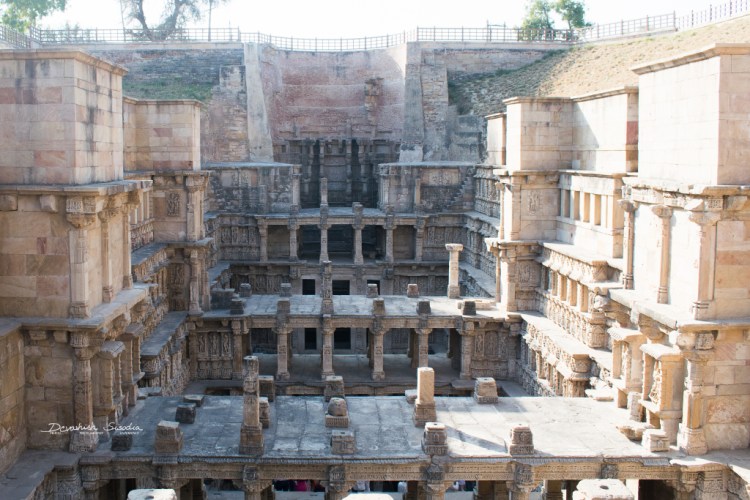
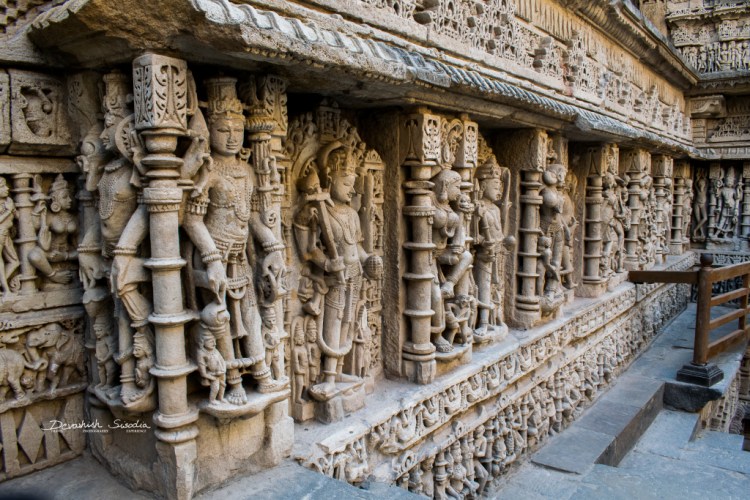
Next stop was for lunch at Kamdhenu Kathiyavadi Hotel, Chanasma where I ordered the first kathiyavadi thali and it has many items; dal (a bit sweet), vasundi (a local sweet made of thickened milk), a seasonal vegetable, cabbage cooked differently, Moong (Green gram whole), Sev Tamatar, salad, Roti, Papad, Rice and Buttermilk (chaach) and it tasted awesome and the sitting arrangement was also traditional. After I ate more than I needed I started my ride towards Patan and soon I was appreciating the roads. No matter which road you take, highway or rural, they are all great. By 4 PM I was at Rani ki Vav, a world heritage site built as an inverted temple to signify the importance of water. It was built by as the name suggests a queen; Queen Udaymati wife of Bhimadeva-I (the one who built sun temple at Modhera) in 11 century. It is printed on the new 100-rupee currency note. The detailing on each statue is very fine and shows the devotion and patience of the artisans. An interesting story is that it was silted with sand when the nearby river flooded and was recently excavated and restored.
Rani ki vav PatanStatues panel at Rani ki Vav Patan
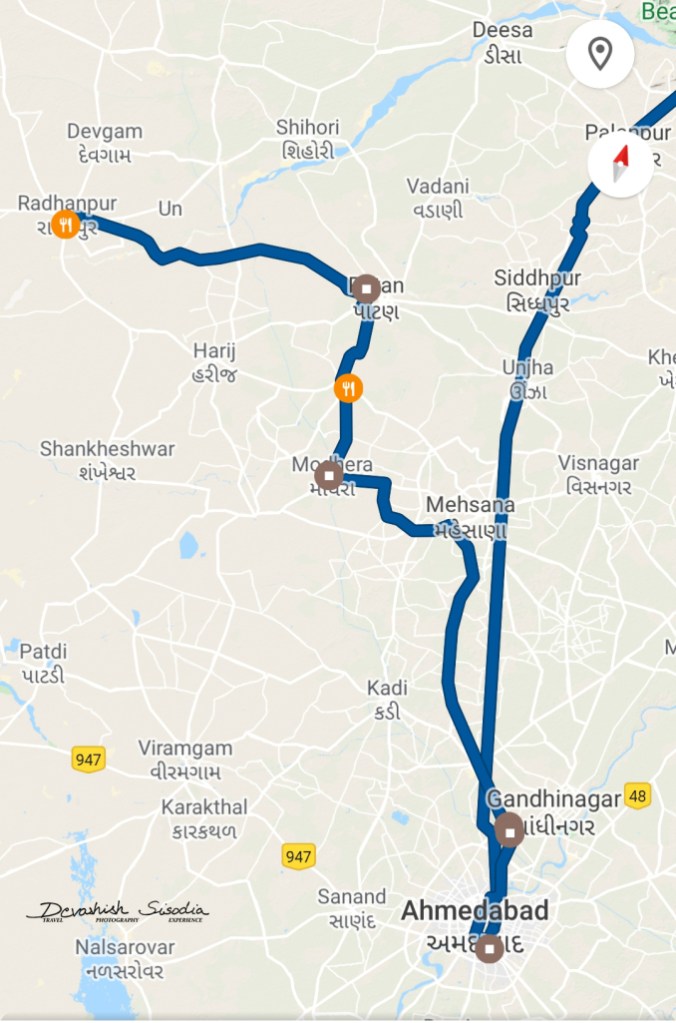
By the time I was free from Rani ki Vav, it was late evening and I now had the decision to make: To stay in Patan which was costly or cover as much distance as I can before it’s too dark. And obviously the latter was chosen and a mad ride ensued. My next day destination next day was Dholavira (an Ancient Harappan site situated between rann of Kutch) so I was moving towards it which took me via rural roads and I realised that there were huge herds of cattle. It felt like everyone was trying to return to their villages with their cattle before dark and then it hit me, Kathiyawadi food has so many milk based items like chaach, Kadhi, Vasundi because the land is arid and traditionally it was mainly used for cattle rearing and other arid crops and crops which needed more water were rarely used in the food but that also didn’t explain the use of rice in Kathiyawadi food.
Dinner at Prince Kathiyawadi Hotel
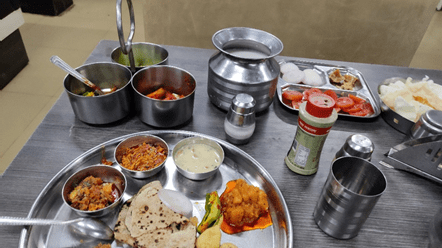
After an hour of riding the rural roads I found a highway and there was a town nearby where I found a place to spend the night – Prince Kathiyawadi Hotel, Radhanpur. I was the only tourist in that hotel that day with a TV but no Dish Connection. Interestingly, the rooms in that hotel had no locks as I was told looks are not required here. I was shocked so took my wallet, phone and camera with me and ordered Kathiyawari thali because that was the only option. And to my surprise I was treated with the hospitality better than the most expensive places I have been to and not just me everyone who was eating there. Here it was not a glass of buttermilk but a pot, not a papad but a plate, not a slice of onion but an extra plate of salad just for me and they served like the relatives make you eat a little more than you want. And then there was a delicious conversation, the waiters job was probably to make you eat more than you want and talk. We talked about things like Rice is not a part of kathiyawari food but added recently by few for tourists, how discovery of natural gas in his nearby village made a few rich, how is gujarati food better than other food etc etc. But just the hospitality makes the place a worthy 5 star. So, now it was time for me to connect everything electronic to a charger and sleep.
 Your Travelling Cousin